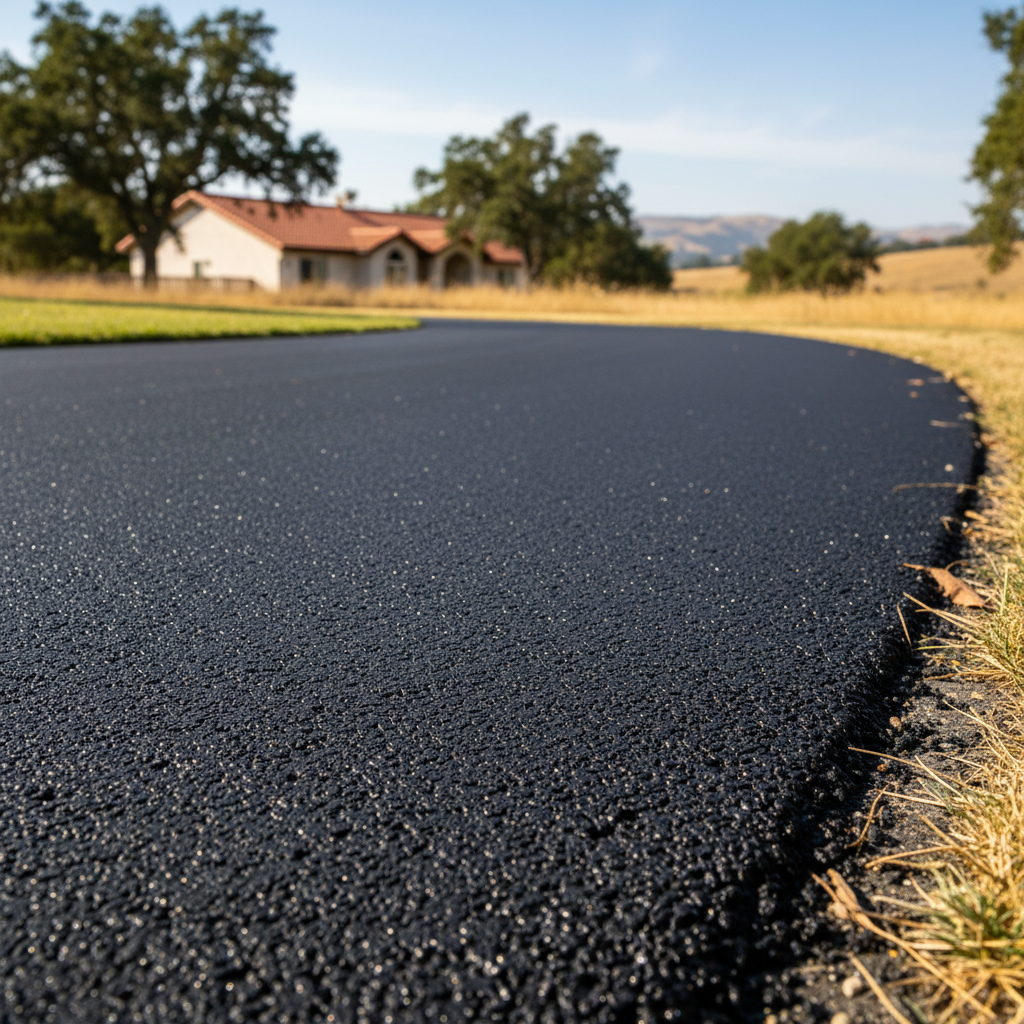
Running a local paving business means Lodi Diamond Asphalt gets asked a lot of questions about residential asphalt. Homeowners want to know how to protect their driveways, what things cost, and when it is time to stop patching and actually fix the problem. Here are direct, no-nonsense answers to the most common questions we hear around town.
How long should a residential asphalt driveway actually last in Lodi?
If your residential asphalt driveway was installed right with a solid aggregate base and gets basic maintenance, you should easily get fifteen to twenty years or more out of it. But here in Lodi, our intense Central Valley summer heat bakes the oils right out of the asphalt, and our local soils can shift. If you ignore maintenance, you will see cracking and crumbling much sooner. Neglect it for a decade, and you might be looking at a total replacement way before your time.
Why is my asphalt cracking when my car isn't even that heavy?
It is usually not about your sedan or SUV. A lot of residential cracking comes down to what is happening underneath the surface. San Joaquin County has plenty of expansive clay soils that swell when moisture hits them and shrink when they dry out. That constant movement creates stress from below. Combine that shifting subgrade with everyday thermal expansion from our hundred-degree summer days, and the pavement eventually splits. Water gets into those cracks, softens the base, and turns a tiny hairline fracture into a major headache.
Can I just sealcoat my driveway to fix those cracks myself?
Do not fall for that trap. Sealcoating is great preventative maintenance, but it is not a repair tool. If you dump sealer over an active crack or a crumbling section, you are just putting makeup on a broken bone. The crack will punch right back through that coating by the next season. You have to clean and fill structural cracks with a rubberized sealant first, patch any bad spots, and then use sealcoat to protect the overall surface from oxidation.
How often do I need to sealcoat my driveway anyway?
Every two to three years is the sweet spot for residential asphalt in our climate. Wait much longer than that, and the asphalt starts oxidizing, turning gray, brittle, and prone to raveling where the aggregate stones start popping loose. Brand new asphalt needs to cure for a bit first, but once it has settled in, getting on a regular two-to-three-year schedule is the cheapest insurance policy you can buy for your property.
What are the signs that I need a complete repave instead of a patch?
If you are out there filling the exact same cracks year after year, or if your driveway looks like a spiderweb of interconnected cracks—what we call alligator cracking—patching is not going to cut it anymore. That pattern means the base underneath has failed completely and can no longer support vehicle weight. When water pools in ruts or sections start sinking near your garage apron, it is time to talk to us at Lodi Diamond Asphalt about grinding down the old surface or starting fresh with a proper sub-base.
Will a new asphalt driveway raise my home's property value?
Curb appeal matters a lot more than people admit. When potential buyers pull up to a house on the west side or out toward Woodbridge and see a deep black, smooth, well-edged driveway, it sends an immediate message that the property has been cared for. A cracked, faded, weed-filled mess tells them the opposite before they even step through the front door. Lodi Diamond Asphalt provides residential asphalt services that give you an immediate visual payoff and protect your structural investment at the same time.