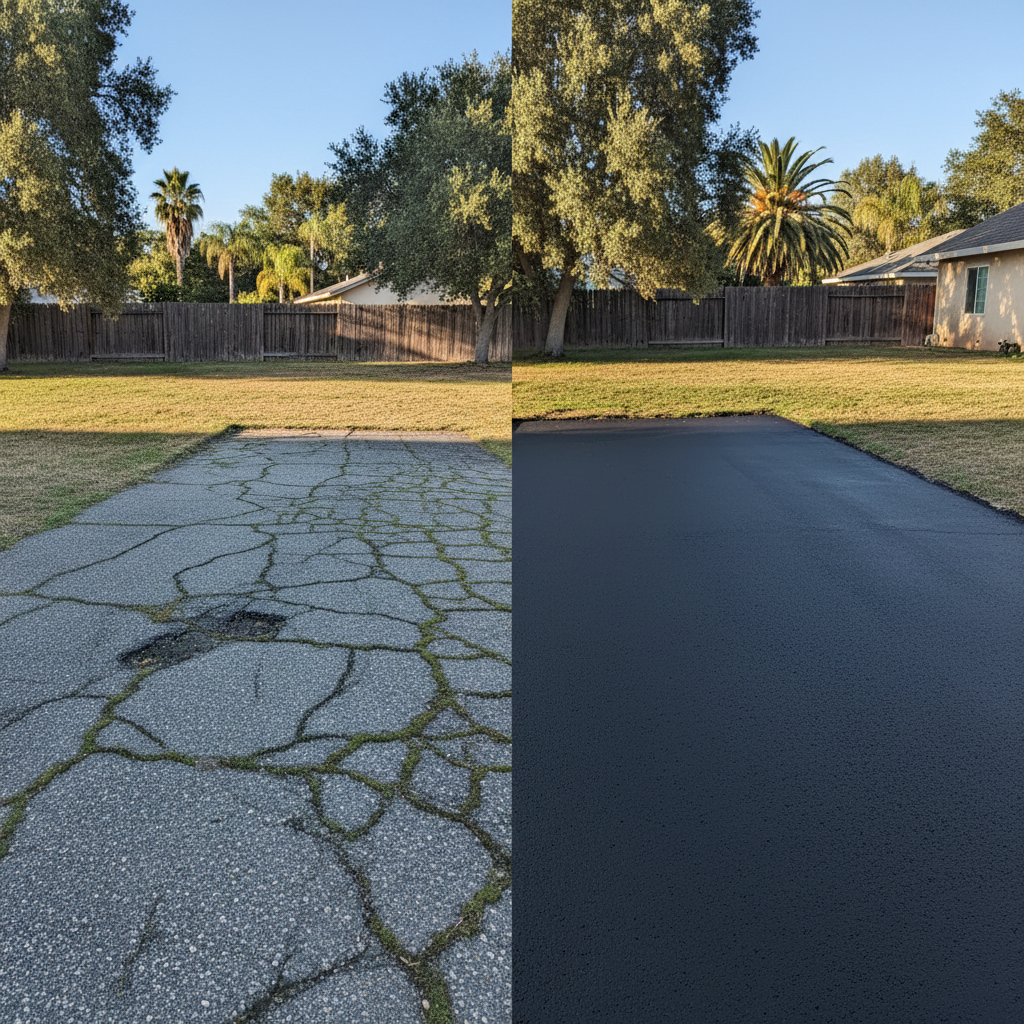
Alright, let's talk about protecting your driveway. You've got asphalt, and you know it needs some love to last. When it comes to sealing it up, you'll hear two main terms thrown around: standard sealcoat and slurry seal. People often use them interchangeably, but they're not the same thing. Not by a long shot. I've been doing this for years here in Lodi, and I've seen plenty of driveways get the wrong treatment, so let's clear it up.
Standard Sealcoat: The Basic Protection
A standard sealcoat is what most folks think of when they hear 'driveway sealing.' It's a thin layer, usually an asphalt emulsion, that you spray or squeegee over your existing asphalt. Think of it like a fresh coat of paint for your driveway. It makes it look nice and new, a deep black color. It also gives you a barrier against UV rays, water, and oil spills. That's good stuff, right?
- Cost: This is definitely the more affordable option upfront. You're putting down less material, so the labor and material costs are lower.
- Durability: This is where it's different. A standard sealcoat is pretty thin. It's designed to protect the surface, but it doesn't add much structural integrity. It'll wear down faster, especially in high-traffic areas or if your driveway sees a lot of heavy vehicles. You'll typically need to reapply it every 2-3 years, sometimes even sooner if you're in a busy spot like a commercial parking lot.
- Maintenance: Pretty low. Just keep it clean, maybe sweep off debris.
- Appearance: Gives you that classic, deep black, 'just paved' look. It'll fill in some minor surface imperfections, but it won't hide cracks or significant wear.
It's a good choice if your driveway is in pretty decent shape, just needs a refresh, and you're on a tighter budget. It'll extend the life of your asphalt, no doubt.
Slurry Seal: The Heavy-Duty Option
Now, a slurry seal is a whole different beast. This isn't just a paint job; it's more like a thin overlay. A slurry seal is a mixture of asphalt emulsion, aggregate (fine sand or crushed rock), water, and some chemical additives. Because it has aggregate in it, it's much thicker and more substantial than a standard sealcoat.
- Cost: It's more expensive than a standard sealcoat, usually by a fair margin. You're using more material, and the application process can be a bit more involved.
- Durability: This is where slurry seal shines. The aggregate gives it a lot more body and wear resistance. It's designed to fill in minor cracks, smooth out rough spots, and provide a much more robust protective layer. It'll stand up to traffic, our hot Lodi summers, and even the occasional heavy rain much better. You can expect a slurry seal to last 5-7 years, sometimes even longer, before needing reapplication. It actually adds a bit of structural strength to the surface.
- Maintenance: Similar to sealcoat, just keep it clean. But because it's thicker, it's more forgiving.
- Appearance: It gives a slightly different look. Because of the aggregate, it's not quite as uniformly smooth and jet-black as a fresh sealcoat. It has a more textured, matte finish, which some people prefer. It does a much better job of hiding minor surface imperfections and hairline cracks.
Which One Should You Choose for Your Lodi Driveway?
Here's my honest take, especially for homeowners around here. If your driveway is relatively new, say less than five years old, and still in great shape with just minor fading, a standard sealcoat might be all you need for now. It'll keep it looking good and protected for a few years.
But if your driveway is older, starting to show some fine cracks, has a rougher texture, or you just want the absolute best protection and longest lifespan between applications, you should seriously consider a slurry seal. Think about the clay soils we often have around Lodi; they can cause a lot of movement and stress on asphalt over time. A slurry seal offers a more resilient surface that can better handle those conditions and the general wear and tear from daily use.
In the long run, the extra cost of a slurry seal often pays for itself because it lasts so much longer. You're not just sealing; you're essentially rejuvenating and strengthening the top layer of your asphalt. For most Lodi homeowners looking for a smart, long-term investment in their property, I usually recommend a slurry seal. It's just a more robust solution. Give Lodi Diamond Asphalt a call if you want to talk specifics about your driveway.